
EXPLORE OUR SERVICES
Explore a personalized, performance-driven approach to rehabilitation and training that combines hands-on care, targeted exercise, and data-driven assessment to restore movement, reduce injury risk, and return you to high-level performance.
What We Offer
IGNITE delivers a comprehensive, performance-driven approach to rehabilitation and training, combining hands-on therapy, targeted exercise, and advanced technology to restore movement, build strength, and optimize performance. Every program is fully personalized, using detailed assessment, objective data, and sport-specific analysis to identify limitations, reduce injury risk, and guide progression. From post-injury and post-operative recovery to high-level performance, preventative care, and in-season maintenance, each phase is structured with purpose to ensure lasting results, efficient movement, and a confident return to activity at the highest level.
Manual Therapy
Manual therapy is a skilled, hands-on treatment used to assess and improve joint mobility, soft tissue quality, and overall movement efficiency. At IGNITE, it’s applied with purpose to address any specific limitations that may be affecting your function in order to help create the foundation for further treatment.
-
Joint mobilization is a precise, hands-on technique used to improve joint motion, reduce stiffness, improve joint adhesions or restrictions, and restore proper mechanics. At IGNITE, it’s applied with intentional technique to restricted joints with the purpose of improving movement quality, range of motion and joint health to improve overall function.
-
Soft tissue mobilization is a hands-on technique used to improve the mobility, flexibility, and function of muscles and surrounding connective tissue. This is used to improve blood flow, circulation, decrease inflammation and effusion, and improve tissue quality in order to restore the capacity for efficient movement and performance.
-
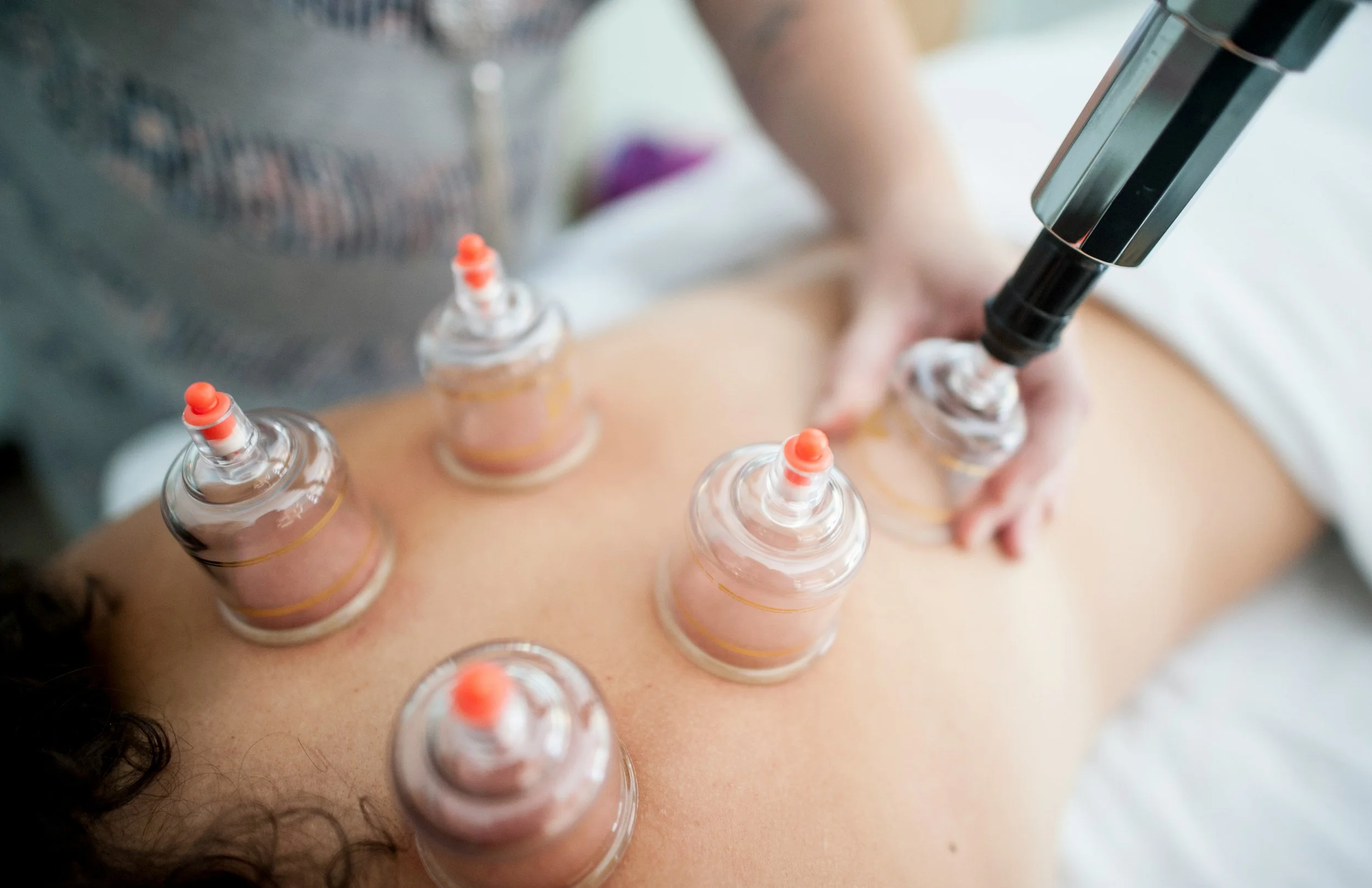
Myofascial decompression uses negative pressure to lift and separate layers of tissue, improving fascial glide, local blood flow and circulation, and improve movement tolerance. This is used to break up tissue restrictions and adhesions to restore movement, improve mobility and tissue quality.
-
Instrument assisted soft tissue mobilization uses specialized tools to apply controlled mechanical stress to soft tissue, influencing collagen remodeling, tissue stiffness, blood flow, circulation and sensory input.
Research supports its role in improving mobility and reducing pain sensitivity, as well as improving fascial restrictions and adhesions. We target specific tissue restrictions identified in assessment. The intent is to create measurable change in mobility, then immediately integrate that into loaded movement so the adaptation holds.
-
Passive range of motion involves externally guided joint movement without muscular effort, used to maintain joint health and reduce stiffness when active motion is limited. At IGNITE, it is used early when needed, with a clear progression toward active control and strength to improve overall mobility and function.
-
Assisted stretching uses external force to improve range of motion and increase stretch tolerance within muscle and connective tissue. This includes techniques such as contract relax, hold relax, and proprioceptive neuromuscular facilitation, which use controlled muscular contractions to drive deeper, more effective range gains through neuromuscular mechanisms. This is used to improve mobility and function when warranted, then reinforced through active control and strength so the improvement is sustained, repeatable, and transferable to performance.
-
Trigger point release targets localized areas of increased sensitivity or restriction within muscle tissue that can alter movement and contribute to pain. Oftentimes, trigger points can cause referred pain to other areas and negatively affect the way an individual moves. At IGNITE, this treatment is used to reduce restriction and restore muscle contribution when warranted, to improve tissue quality, decrease restrictions, improve muscle function and decrease pain. This is then followed by activation and strength work to reestablish proper function.
Therapeutic Exercise
Exercise therapy is the structured use of movement to restore function, build strength, and improve capacity, and is one of the most supported approaches in rehabilitation. At IGNITE, this form of therapy creates the foundation of every program, progressing from basic control to high level performance based on your goals. We ensure to create a unique exercise program specific to your goals.
-
Blood flow restriction training uses external pressure to partially limit blood flow during low load exercise, allowing strength and hypertrophy adaptations without heavy loading. This method is often used to maintain and build strength when higher loads may not be appropriate, keeping progress moving without compromising recovery.
-
Neuromuscular re-education focuses on creating improved connections between the nervous system and musculoskeletal system in order to retrain coordination, timing, proprioception and muscle activation for improved movement efficiency and stability.
-
Personalized programming applies principles of specificity and progression to build training around your needs and goals. At IGNITE, every program is designed based on your body, your sport, and your performance targets, ensuring each phase of training has purpose and nothing is “cookie cutter”. These programs are thought out, guided and created to fit your needs and improve your function and performance.
-
Strength training develops force production and tissue capacity through progressive resistance. These methods are built upon interventions that directly transfer to your activity, improving resilience and performance under load.
-
Power development trains the ability to produce force quickly, combining strength and speed for explosive movement. Once strength is established, power is developed which prepares for high demand, fast-paced athletic tasks and exerting maximum force within a short amount of time.
-
Stability training focuses on controlling joint position under load through coordinated muscular support. This is integrated in multiple planes, through static and dynamic movement and within specific sport demands to improve control development in positions that reflect real performance demands.
-
Active mobility combines flexibility with strength, requiring control throughout a full range of motion. At IGNITE, mobility is trained actively so every range gained is stable, controlled, and usable under load.
Sports Performance Training
Sports performance training develops the physical qualities required for athletic output, including strength, speed, and movement efficiency. Our training is tailored to the specific demands of your activity or sport to bridge the gap between rehab and full performance. We break down the physical demands, movements and biomechanics of your sport in order to create a tailored program that fits your needs and prevents injury.
-
Injury screening is a structured evaluation of movement quality, joint mobility, strength, and asymmetries to identify breakdowns before they turn into missed time. Research consistently shows that unmanaged deficits in mobility, strength imbalance, and poor movement control increase injury risk and limit performance output. IGNITE provides a detailed assessment at how an athlete produces and controls force and analyzes
-
A performance movement screen is a detailed analysis of how an athlete moves under load, through range, and across patterns relevant to their sport. It identifies inefficiencies in force production, poor sequencing, and compensations that limit output and increase stress on the body. Research shows that movement quality directly impacts both performance and injury risk. This creates awareness of how athletes move, not just how strong or flexible they are and what inefficiencies may be producing negative outcomes outside the clinic. It highlights what is holding them back from higher level performance. For teams and schools, it provides a scalable way to assess movement across an entire roster. Common breakdowns can be identified and addressed within training, leading to better efficiency, fewer compensations, and more consistent performance. Limitations are translated into targeted strategies that improve movement efficiency, allowing athletes to produce and absorb force more effectively in competition
-
Return to sport testing evaluates whether an athlete can meet the physical demands of their sport through objective measures of strength, power, symmetry, and movement control. Time alone is not a reliable indicator of readiness, data driven testing is. Athletes often feel ready before they are physically prepared. This gap is unfortunately where reinjury happens. This process removes guesswork and allows more confident return to sport. Athletes are assessed against clear benchmarks that reflect the demands of their sport. Strength deficits, asymmetries, and movement limitations are identified and addressed before full return and are specific to their sport in order to create similar environments and stressors that will affect them in the real world. The goal is to create a standard in which decisions are made based on measurable performance, not pressure or timelines. Athletes come back more prepared, reducing reinjury rates and improving confidence in competition.
-
Off season is where long term performance is built. It is the phase to address limitations, rebuild strength, and improve movement capacity without the constraints of competition. Research supports this period as critical for developing resilience and reducing injury risk during the season. Athletes often carry unresolved deficits from the previous season. If those are not addressed, they show up again under load when the season returns. This phase focuses on identifying weaknesses, correcting movement inefficiencies, and building strength through full ranges. Prehab is integrated into training, not treated as a separate task, ensuring durability is developed alongside performance with a trained eye and skill for developing gains without injury. For teams and schools, structured off season training creates more prepared athletes entering the season. Stronger, more resilient players with better movement efficiency translate to higher performance and fewer breakdowns. This is where the foundation is built.
-
Post season recovery is a structured process to restore the body after prolonged physical and neurological stress. A competitive season accumulates fatigue, minor tissue irritation, and movement compensations that, if ignored, carry into the next phase. Calculated and intentional use of this period is integral for recovery and optimal future performance. Athletes need to restore movement quality, address lingering issues, and gradually rebuild capacity. Research shows that active recovery strategies improve tissue health, maintain baseline strength, and prepare the body for the next training cycle. This phase reduces the carryover of unresolved issues into the off season. Athletes transition out of competition in a controlled way, allowing for more effective training when rebuilding begins. The goal is to reset the system without losing capacity.
-
In season maintenance is the strategic management of strength, mobility, and recovery while competing. Performance does not maintain itself. Without structure, athletes lose capacity over the course of a season. Fatigue accumulates, movement quality declines, and injury risk increases. Maintenance training focuses on preserving strength, reinforcing movement patterns, and managing workload. Consistent, targeted training during the season helps maintain performance and reduces injury incidence. Athletes maintain output with more longevity into the season, recover more effectively between competitions, and are less likely to break down under cumulative stress. The goal is to stay ready, stay available, and continue performing when it matters most with a sports physical therapist to guide the proper way to make this happen.
Post-Op Recovery
Post operative recovery is a structured progression focused on restoring mobility, strength, and function after surgery. At IGNITE, we rehabilitate all post operative cases and support you in returning to your desired activity or sport. This specific rehab is guided by both healing timelines and individual capacity through clinical expertise and decision making, ensuring you return not just recovered, but prepared for high level performance.
Technology
-
Theragun applies high-frequency percussive force to soft tissue, creating rapid mechanical stimulation that can reduce muscle stiffness and improve short-term range of motion. It also provides a strong sensory input that can downregulate tone and improve readiness for movement. It is used to prepare specific areas before loading or to restore tissue quality after high demand sessions.
-
Dynamometer testing measures force output with precision, giving objective data on strength levels, side-to-side differences, and rate of force production. This removes subjective opinions and exposes deficits that are not always visible in movement alone.This data drives decision making and identifies where an individual is underperforming, tracks progress over time, and sets clear benchmarks for progression and return to sport. Strength is not assumed, it is measured and verified through specific and repeatable assessments.
-
Biomechanical assessment breaks down how force moves through the body during real movement. We use systems to analyze joint positioning, sequencing, load distribution, and where energy is lost or transferred inefficiently. This is where movement problems are identified and broken down into where the root cause is occurring and how the body system is operating as a whole. Findings are used to make precise adjustments to mechanics, improve force transfer, and reduce unnecessary stress so the individual can move with efficiency and improved functional output.
-
Normatec uses sequential pneumatic compression to drive fluid movement and support circulation and blood flow. This is often utilized following intense activity, games, competitions or bodily stressors. This can reduce perceived soreness and help manage the effects of accumulated fatigue and inflammation. Our equipment is trusted by elite athletes in order to recover well and return to activity more quickly.